




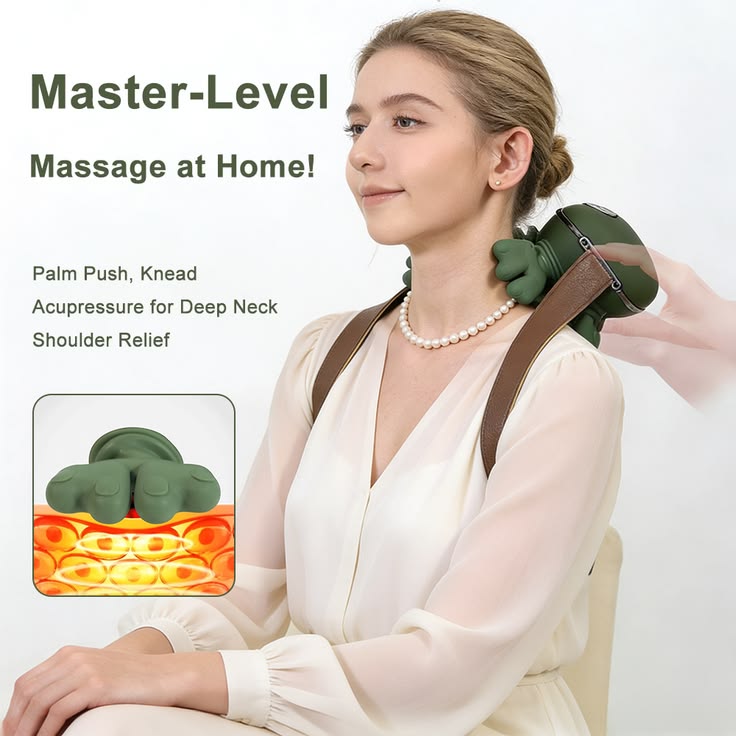
Ergonomic design is one of the most important factors in how effective a neck massager feels in real use. While power, heat, and kneading technology all contribute to relief, none of them matter if the device does not properly align with the body. The neck is a complex structure of muscles, nerves, and vertebrae, and even small positioning errors can change how pressure is delivered.
Contoured neck massagers are designed to solve this problem by matching the natural anatomy of the cervical region. Instead of applying random pressure, they direct force precisely where tension tends to build, improving both comfort and effectiveness.
Why Neck Anatomy Requires Precision Design
The neck is not a flat surface. It is a curved, flexible structure supported by multiple muscle layers.
The Cervical Curve
The cervical spine naturally forms a gentle curve that supports the head. When a massager does not follow this curve, pressure becomes uneven and less effective.
Muscle Distribution
Key muscles in the neck and upper shoulders include:
- Upper trapezius
- Levator scapulae
- Sternocleidomastoid
- Deep cervical stabilizers
These muscles are layered and positioned at different depths, requiring targeted contact rather than broad pressure.
Sensitivity of the Area
The neck contains many nerves and blood vessels, making precision essential to avoid discomfort while still reaching deep muscle tissue.
What Makes a Massager “Ergonomic”
An ergonomic neck massager is shaped and engineered to fit the body rather than forcing the body to adapt to the device.
1. Contoured Shape Design
The outer structure is curved to follow the shoulders and neck naturally. This ensures:
- Stable positioning during use
- Even distribution of pressure
- Better alignment with muscle groups
2. Strategic Node Placement
Massage nodes are positioned based on common tension points in the trapezius and cervical region. This allows them to target muscles more effectively without shifting during use.
3. Balanced Weight Distribution
Ergonomic devices are designed so that weight is evenly spread across the shoulders. This prevents strain during longer sessions Neck shoulder massager.
4. Flexible Fit Adjustment
Some designs allow slight flexibility to accommodate different body shapes, improving comfort and contact accuracy.
How Contoured Design Improves Massage Accuracy
Precision is the main advantage of ergonomic shaping.
Direct Muscle Contact
Contoured designs ensure that massage nodes make contact with muscle tissue rather than bone or empty space.
Stable Pressure Application
When the device stays in place, pressure remains consistent, allowing deeper and more effective kneading.
Reduced Need for Repositioning
Users do not need to constantly adjust the device, which allows muscles to relax fully.
Matching the Cervical Spine’s Natural Curve
One of the most important functions of ergonomic design is alignment with the cervical spine.
Maintaining Neutral Position
A well-designed massager supports the neck in a neutral position, preventing additional strain during use.
Supporting Natural Movement
Instead of restricting movement, ergonomic devices allow slight adjustments while maintaining effective contact.
Reducing Pressure Imbalance
Even distribution prevents overloading sensitive areas while still targeting tight muscles.
Targeting Key Pain Zones in the Neck
Ergonomic massagers are built around predictable pain and tension zones.
Base of the Skull
Common area for tension headaches and stress-related tightness.
Upper Neck Region
Often affected by forward head posture and screen use.
Shoulder-Neck Junction
A primary location for trapezius knots and chronic stiffness.
Why Poor Design Reduces Effectiveness
A powerful massager with poor ergonomics may still feel ineffective.
Misaligned Pressure
If nodes do not reach the correct muscles, intensity is wasted.
Uneven Contact
Gaps between the device and body reduce massage efficiency.
Increased Discomfort
Poor fit can create pressure on bones or sensitive areas instead of muscles.
The Role of Ergonomics in Comfort and Safety
Comfort is not just about softness—it is about proper alignment.
Preventing Overpressure
Good design distributes force evenly to avoid excessive pressure in one spot.
Supporting Long Sessions
Ergonomic shaping allows longer use without discomfort.
Reducing Muscle Resistance
When the device fits well, muscles relax more easily instead of resisting pressure.
How Ergonomic Design Enhances Other Features
Ergonomics improves the performance of all other technologies.
With Heat Therapy
Even contact ensures heat is distributed uniformly across muscle groups.
With Kneading Motion
Stable positioning allows massage nodes to maintain consistent rhythm and depth.
With Adjustable Intensity
Proper alignment ensures that intensity settings feel accurate and controlled.
Everyday Benefits of Ergonomic Neck Massagers
1. Faster Muscle Relaxation
Better alignment means muscles respond more quickly to massage.
2. Improved Posture Awareness
Regular use can help users recognize tension patterns in their neck and shoulders.
3. Reduced Daily Stiffness
Consistent targeting of key muscle groups helps prevent buildup of chronic tension.
4. More Natural Massage Feel
Ergonomic design makes the experience feel closer to human hands.
Common Mistakes When Using Neck Massagers
Even with good design, improper use can reduce benefits.
Wearing It Incorrectly
Misalignment reduces contact with key muscle groups.
Slouching During Use
Poor posture can shift pressure away from intended areas.
Ignoring Fit Adjustments
Not adjusting straps or positioning can affect performance.
Why Ergonomics Matters More Than Power
High power alone does not guarantee effectiveness.
Precision Over Force
Correct placement is more important than intensity.
Comfort Enables Consistency
A comfortable device is more likely to be used regularly.
Efficiency of Pressure
Proper alignment ensures that every unit of pressure is used effectively.
Final Thoughts
Ergonomic design is the foundation of an effective neck massager. By closely matching the natural anatomy of the cervical spine and surrounding muscles, contoured devices ensure that pressure, heat, and kneading motion are delivered exactly where they are needed.
When design and anatomy work together, the result is a more comfortable, efficient, and natural massage experience. Instead of forcing the body to adapt to the device, ergonomic massagers adapt to the body—making recovery smoother, faster, and more effective over time.
